
Laser hair removal advertising shows a familiar profile: dark hair on fair-to-medium skin. Anyone with naturally blonde, white, or grey hair quickly learns the unspoken caveat — lasers were not designed for them, and removal of unwanted hair can seem out of reach. Electrolysis for blonde hair is the one method recognised as permanent regardless of pigment, and it has been used in dermatology since the late nineteenth century. The mechanism has nothing in common with light-based devices, which is why it works on hair lasers cannot see.
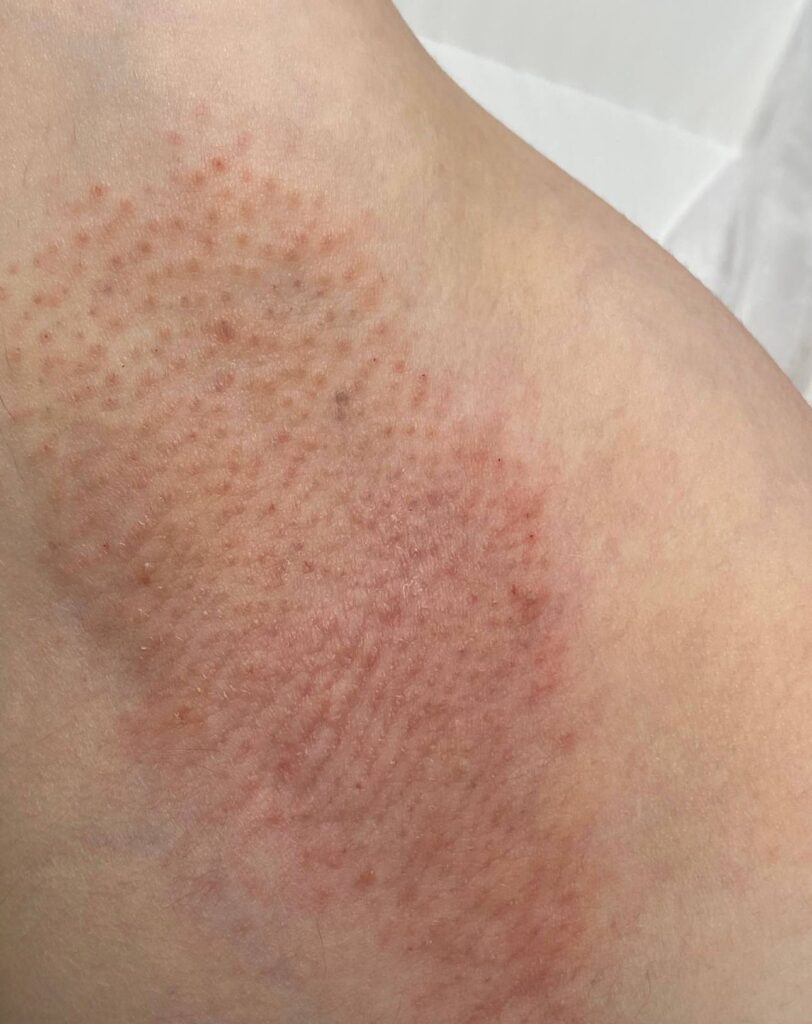
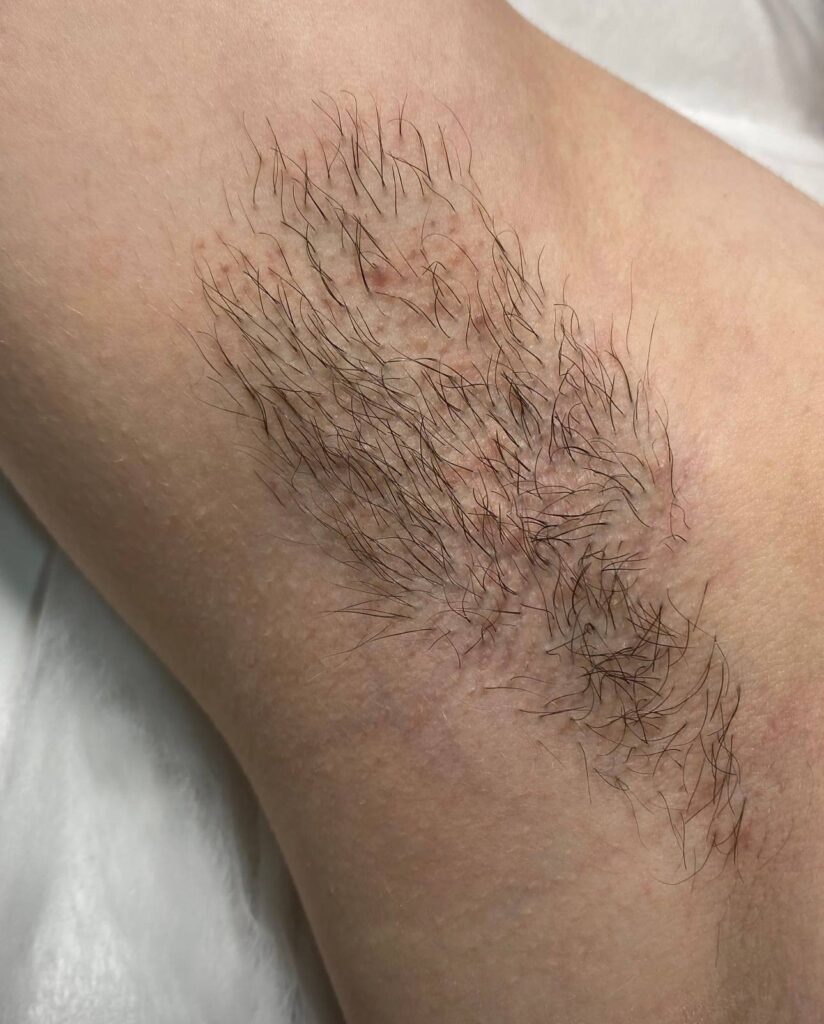
Why blonde and grey hair is difficult to remove permanently
The role of melanin in laser hair removal
Lasers and intense pulsed light (IPL) devices remove hair through a principle called selective photothermolysis. The wavelength of light is matched to a target chromophore, and for hair removal that target is melanin — the pigment that gives hair its colour. As the beam passes through the skin, melanin in the hair shaft and at the bulb absorbs the energy, converts it to heat, and damages the surrounding follicular structures.
The whole process depends on contrast. Dark hair against lighter skin gives the device the strongest signal: plenty of melanin in the hair, very little to absorb in the surrounding tissue.
Why blonde, white, and grey hair contains little or no melanin
Hair colour comes from two melanin variants. Eumelanin produces black and brown shades; pheomelanin produces red and warm tones. Naturally blonde hair carries small amounts of either. Grey hair is the result of melanocytes — the pigment-producing cells at the hair root — gradually losing function with age. White hair contains no melanin at all.
Without that pigment, a laser pulse has nothing to lock onto. The energy passes through the hair shaft and disperses into surrounding tissue, which is precisely what the device is engineered to avoid.
What this means for permanent hair removal options
Pigment-free hair makes the follicle invisible to any light-based system. Newer wavelengths and pre-treatment dyes are sometimes marketed as workarounds, but results remain inconsistent and fall well short of what laser achieves on dark hair. For genuine permanence on blonde, white, or grey hair, the realistic option is electrolysis — a method that ignores colour entirely.
Does electrolysis work on blonde and grey hair?
How electrolysis destroys the hair follicle
Treatment proceeds one follicle at a time. The electrologist slides a fine, sterile probe — thinner than the hair itself — alongside the hair shaft, down to the dermal papilla at the base of the follicle. A controlled electrical current passes through the probe and disables the cells responsible for producing the hair. The treated hair is then lifted out with tweezers; if there is any resistance, the follicle was not adequately treated and the practitioner adjusts the settings.
The technique targets the structure of the follicle itself, not anything inside the hair shaft. Pigment is irrelevant to whether the current reaches its target, and probe insertion depth is matched to each individual hair rather than averaged across the area.
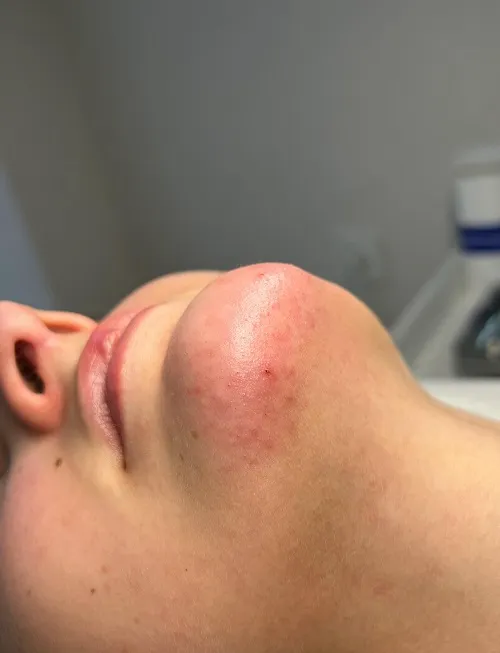
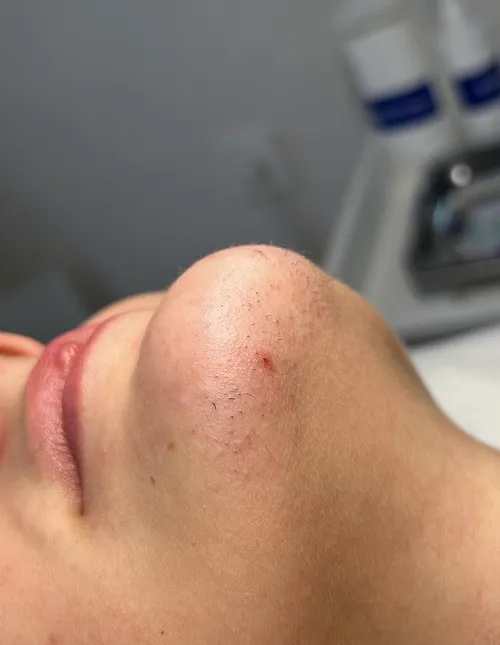
Why hair colour and skin tone do not affect electrolysis results
Because the energy is delivered through a probe rather than through the skin, electrolysis is suitable for all skin tones and every hair type — fine pale blonde, coarse white, salt-and-pepper grey, red, or jet-black. The US Food and Drug Administration (FDA) recognises electrolysis as the only method that may be marketed as permanent hair removal; other methods, including laser, are classified as permanent hair reduction. In Dubai, both treatments are available at clinics licensed by the Dubai Health Authority (DHA), and the FDA position is widely cited as the international quality benchmark.
Permanent hair reduction” and “permanent hair removal” are not interchangeable claims. Reduction means a long-lasting decrease in the number of regrowing hairs; removal means the treated follicle no longer produces hair. For pigment-free hair, only electrolysis can be expected to deliver the second outcome.
Types of electrolysis and which works best for light-coloured hair
Three modalities are in clinical use today. They differ in the type of current and in what that current does inside the follicle, and an experienced electrologist will choose between them based on the hair, the area, and the individual response.
Galvanic electrolysis
The chemistry of galvanic electrolysis is straightforward. A low-level direct current passes through the probe and triggers a small chemical reaction at the base of the follicle, where saline naturally present in tissue converts to sodium hydroxide — a mild caustic that disables the dermal papilla. The method is precise and reliable, but slow. Each follicle needs a longer current application than thermolysis, which makes treatment of large areas time-consuming.
Thermolysis (high-frequency)
Heat does the work in thermolysis. A brief high-frequency alternating current at the probe tip generates localised warming and coagulates the follicular base, and sessions move quickly. On very fine blonde hair the modality works well, but on distorted or deeply rooted hairs the heat pattern can be uneven, and an unskilled hand will leave more regrowth than expected.
Blend method: why it is often recommended for blonde and grey hair
Galvanic and thermolysis can be applied together in the same insertion. The heat speeds up the chemical reaction, and the chemistry compensates for any unevenness in heat distribution. The result has the destructive efficiency of galvanic with treatment times closer to thermolysis. For grey, white, and coarser blonde hair — particularly facial hair that has emerged after hormonal changes — blend gives the most consistent clearance, and many experienced practitioners default to it.
| Method | How it works | Speed per follicle | Best suited to |
| Galvanic | Chemical (sodium hydroxide forms in the follicle) | Slowest | Distorted follicles, low pain tolerance |
| Thermolysis | Localised heat coagulates the follicle base | Fastest | Fine, straight, shallow hair |
| Blend | Chemical and heat combined in one insertion | Medium | Coarse, grey, hormonal, or stubborn hair |
| Method | How it works | Speed per follicle | Best suited to |
|---|---|---|---|
| Galvanic | Chemical (sodium hydroxide forms in the follicle) | Slowest | Distorted follicles, low pain tolerance |
| Thermolysis | Localised heat coagulates the follicle base | Fastest | Fine, straight, shallow hair |
| Blend | Chemical and heat combined in one insertion | Medium | Coarse, grey, hormonal, or stubborn hair |
How many sessions will you need?
The hair growth cycle and why multiple sessions are required
Hair grows in cycles. In the anagen phase, the follicle is producing a hair attached to a well-formed dermal papilla — and only at this stage can electrolysis cause permanent damage. During catagen the follicle is shrinking, and during telogen it rests with no hair attached. At any moment, only a portion of hairs in a given area are in anagen; the rest will need to be treated as they cycle back into active growth. That is why a single clearance, however complete it looks on the day, is never the end of the course.
Factors that affect treatment duration for blonde and grey hair
Several variables determine how long permanent removal takes and how many sessions are required:
- Size of the area to be treated. The upper lip can be cleared in a few months; a full beard line, jawline, or chest takes much longer.
- Hair density and coarseness. Fine vellus hair is faster to treat; thick hormonal hair on the chin or neck sits deeper and needs more time per follicle.
- Hormonal influences. Polycystic ovary syndrome, perimenopause, and certain medications keep stimulating new follicles into activity, extending the course.
- Adherence to the treatment schedule. Missed appointments allow follicles to cycle through anagen untreated, and progress slows visibly.
- Skill and probe choice of the practitioner. A correctly sized probe and accurate insertion damage the follicle with minimal trauma to surrounding tissue.
Realistic timeline: what to expect month by month
For a small area like the upper lip, a first complete clearance typically takes a series of weekly or fortnightly appointments over the first few months. Visible reduction follows quickly: the area looks finer and patchier within weeks. Across the next 9–18 months, sessions become shorter and less frequent as fewer follicles regrow. By the end, only occasional touch-ups are needed, often a few times a year, and eventually not at all.
Larger areas — chest, full beard outline, lower legs — take longer in proportion. A realistic full course for hormonal facial hair may run a year and a half to two years before sessions taper to maintenance.
Electrolysis is permanent only when the hair is treated in the anagen phase by a trained practitioner using a correctly inserted probe. Skipping appointments or stretching intervals beyond what the electrologist recommends pushes the timeline longer and reduces the effectiveness of each session.
What electrolysis sessions feel like and what to expect
Pain and sensation during treatment
Most clients describe a brief warm prickle or sting during the current pulse, not the insertion. Pulses are very short, and a skilled electrologist adjusts intensity to the client’s threshold. Discomfort varies by area: the upper lip, chin, and bikini line are more sensitive than the legs, arms, or chest. A topical numbing cream applied 30–45 minutes before the appointment reduces sensation and is routinely used for facial work.
Skin reactions after each session
After a normal session, the skin shows mild redness and slight swelling at the treated points, sometimes with pinpoint scabs. These local responses to the controlled injury inside the follicle resolve quickly. Occasionally tiny scabs form over the next day or two and fall off on their own. Aftercare is straightforward: keep the area clean, avoid heat (sauna, hot shower) for the first 24 hours, skip make-up over treated facial skin for the rest of that day, and apply a soothing product if the practitioner recommends one.
How to prepare for your appointment
A few preparation steps make the session go more smoothly:
- Arrive with the hair visible — long enough for the practitioner to grasp with tweezers, around the length of a few days’ regrowth.
- Avoid waxing, threading, or tweezing the area for at least 1–2 weeks before the session. These methods remove the hair from the follicle and leave nothing to treat. Shaving or trimming is fine right up to the appointment.
- Skip caffeine and avoid alcohol for several hours before; both raise sensitivity.
- Stay out of direct sunlight on the area for a few days before and after.
- If you use retinoids or hydroquinone, or are undergoing any other dermatological treatment, mention it at the consultation.
Safety and side effects of electrolysis on fair skin
Common short-term side effects
Reactions after a normal session are local responses to the controlled injury inside the follicle, and they resolve quickly. Expect mild redness and slight swelling at the treated points, sometimes with tiny scabs. A heat sensation can persist for a few minutes after the current is delivered. Very occasionally a small bruise appears in thinner-skinned areas like the inner thigh or upper lip.

Risk of scarring or pigmentation changes
Risk rises with poor technique: a probe inserted at the wrong angle, current set too high, or over-aggressive treatment of already irritated skin. In trained hands these complications are rare. People with very fair skin should be aware that any inflammation can leave temporary post-inflammatory pigmentation, especially in summer when sun exposure on the treated area is harder to avoid. Strict sun protection on the area for 1–2 weeks after each session, and a practitioner who tests intensity conservatively at the first appointment, are the two factors that matter most. A clinic that reuses probes is a clinic to leave.
Electrolysis vs laser hair removal for blonde and grey hair
Why laser, including Nd:YAG, does not work on pigment-free hair
Every approved laser for hair removal targets melanin. Alexandrite (755 nm) and diode (810 nm) lasers handle most cases, while Nd:YAG (1064 nm) penetrates more deeply and is the safer choice on darker skin. None of them solves the underlying problem: a follicle producing white or pale blonde hair has no chromophore for the device to find. Some clinics will still attempt laser on light hair; results, if any, are unpredictable and rarely permanent.
Frequently asked questions
Can electrolysis be used on any part of the body if the hair is blonde or grey?
Yes, with limited exceptions: the inside of the nose and ears is not treated for safety reasons, and the eyelashes are not treated either. Every other area — face, neck, chest, abdomen, back, arms, legs, and bikini line — is suitable.
Does electrolysis work on peach fuzz and very fine blonde hair?
It does, and for vellus hair it is the only permanent option. Treatment is generally only recommended where the hair is actually bothersome; clearing all facial vellus hair is rarely advised because that fine layer plays a role in skin texture and product absorption.
Will hair grow back a different colour after electrolysis?
A successfully treated follicle does not grow hair at all. Surrounding follicles continue to produce hair of their normal colour, including new grey hairs that emerge in untreated follicles with age.
Is electrolysis safe during pregnancy or while taking certain medications?
Most practitioners avoid treatment during pregnancy as a precaution rather than because of documented harm, and standard practice is to wait until after delivery. Isotretinoin, anticoagulants, and certain other medications may require adjusted timing or technique. Disclose all current medications and conditions at the consultation.
How long after a session before I can shave or wax?
Shaving is fine after about 24 hours, once the skin has settled. Waxing, threading, or tweezing should be avoided throughout the entire course — they remove the hair the practitioner needs to treat at the next appointment.
How does the cost of electrolysis compare with laser hair removal?
Electrolysis is typically charged by treatment time rather than by area, so direct comparison is difficult. For a small zone where laser would clear hair quickly, laser is usually less expensive overall and finishes sooner. For pigment-free hair, where laser does not work, the relevant comparison is between electrolysis and no permanent option at all.
Is electrolysis a good choice for long-term unwanted hair from hormonal causes?
Yes, particularly when laser hair removal has limited reach because of hair colour. Hormonal patterns of unwanted facial and body hair often include a mix of dark, vellus, and grey hairs, and electrolysis is the only method that addresses all three. Sessions continue alongside any underlying medical management.