
Two methods come up in nearly every conversation about getting rid of unwanted hair for good: electrolysis vs laser hair removal. They’re often described as close cousins. They aren’t. The mechanism, the physics, and the regulatory classification of what each can deliver are all different. Choosing between them — or deciding to use both — comes down to specifics: hair colour, skin tone, the body area, hormonal background, and how much time someone is prepared to commit.
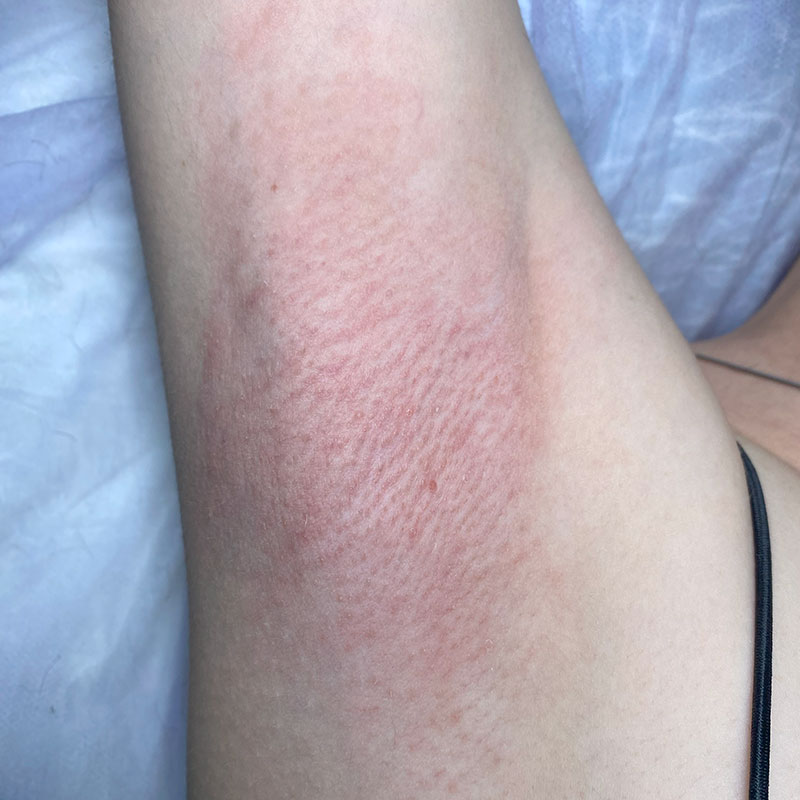
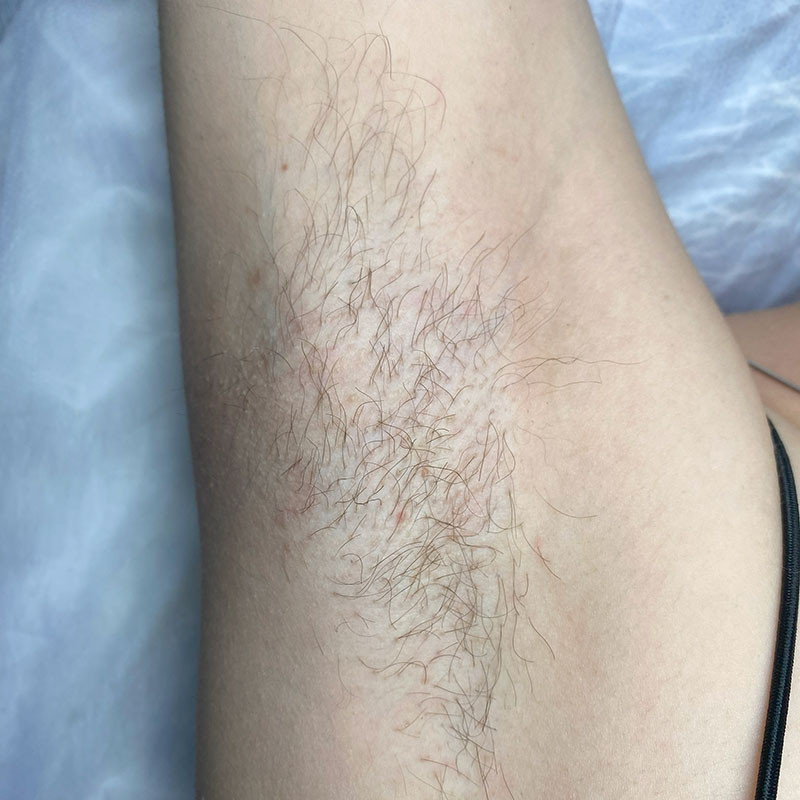
What is each method and how does it work
How electrolysis works: targeting individual follicles with electrical current
Electrolysis predates laser by more than a century. A fine probe, typically 0.05–0.1 mm in diameter, slides down the natural opening of a hair follicle alongside the hair itself. No skin puncture. An electrical current then destroys the cells responsible for producing the hair: the dermal papilla and the bulge area where stem cells live.
Three working modes are used:
- Galvanic. Direct current creates a chemical reaction inside the follicle (sodium hydroxide), which dissolves the follicular structures. Slow but thorough.
- Thermolysis. High-frequency alternating current heats the tissue around the probe tip; heat coagulates the follicle cells. Fast.
- Blend. Both currents together. The combination is the workhorse of clinical electrolysis: faster than pure galvanic, more reliable than thermolysis on coarse or distorted follicles.
After the current is delivered, the electrologist lifts the hair out with sterile tweezers. If the follicle has been treated correctly, the hair slides free with no resistance. Each hair follicle is treated individually. That detail explains almost everything about how electrolysis differs from laser.
How laser hair removal works: using light energy to disable hair growth
Laser works on the principle of selective photothermolysis. A pulse of light at a specific wavelength is absorbed by melanin in the hair shaft, conducted down to the follicle, and converted into heat. The heat damages the follicle enough to disrupt regrowth, sometimes for years, sometimes for life, depending on hair, skin, and equipment.
Three laser types dominate clinical practice:
- Alexandrite (755 nm). Strong absorption by melanin, fast on large areas, best on lighter skin (Fitzpatrick I–III).
- Diode (around 800–810 nm). Good balance of depth and safety; the most common laser in use.
- Nd:YAG (1064 nm). Longer wavelength, less melanin uptake at the surface, the safer choice for darker skin (Fitzpatrick IV–VI).
A laser pulse treats a square or rectangle of skin in one shot rather than a single hair. That’s why a leg or a back can be cleared so quickly, and why the same physics that makes laser fast on the right candidate makes it ineffective on the wrong one.
The core difference: permanent vs long-term hair removal
The single most important distinction is regulatory. The US Food and Drug Administration (FDA) classifies electrolysis as permanent hair removal — the only modality with that designation. Laser hair removal is classified as permanent hair reduction. The wording isn’t marketing semantics; it reflects what each method has been shown to do in clinical evidence.
Practical translation: a hair follicle correctly treated with electrolysis no longer produces a hair. A follicle treated with laser will, in most cases, produce a thinner and slower-growing hair, and many follicles will stop producing entirely. A percentage will eventually recover, especially under hormonal influence.
That’s why people who have had laser often return for top-up sessions years later. People who have completed an electrolysis course generally don’t.
A clinic in Dubai advertising “100% permanent results” from a laser is overstating what the regulator permits. Look for honest framing — “long-term hair reduction” or “lasting results” — and a frank conversation about what the device can and can’t do for a particular case.
Which hair and skin types each method works for
Electrolysis: works on all hair colours and skin tones
Electrolysis doesn’t depend on a colour contrast between hair and skin, so it works on everyone. Grey hair. Blonde hair. Red hair. Fine peach fuzz. Coarse beard hair on a deep skin tone. The current targets the follicle structure, regardless of pigment.
This is the only method clinically able to treat:
- Light, blonde, grey, white, or red hair.
- Very fine vellus hair.
- Hair on Fitzpatrick V–VI skin where laser carries higher risk.
- Hair growth driven by hormones, where new follicles keep activating.
Laser hair removal: most effective on the dark-hair-light-skin combination
Laser needs melanin in the hair to work. It also needs less melanin in the skin than in the hair, so the energy goes where it’s intended. The classic ideal candidate has Fitzpatrick I–III skin and dark, coarse hair. On that profile, laser is fast and reliably effective.
Move outside that profile and the picture changes. On light or grey hair, the laser has nothing to target. On deeper skin tones, surface melanin competes for the energy and raises the risk of burns and pigmentation changes — unless an Nd:YAG laser is used by an operator who knows how to set it for that skin type.
Skin tone and the Fitzpatrick scale: what it means for laser safety
The Fitzpatrick scale is a six-point classification used in dermatology to describe how skin reacts to sunlight. Type I always burns and never tans; Type VI is deeply pigmented and rarely burns. For laser hair removal, the scale is the safety map.
In Dubai’s mixed population, Fitzpatrick III–V are the most common phototypes seen in clinic. That’s the range where laser still works well, but where machine choice and operator skill matter most. The Nd:YAG is the workhorse for darker phototypes; alexandrite and diode are common for lighter tones. A clinic that uses one laser for every patient regardless of phototype hasn’t kept pace with the technology.
How many sessions each method requires
Electrolysis treatment timeline: why it takes longer
Electrolysis treats one follicle at a time. The full course depends on the area, hair density, and the hair-growth cycle. Hair grows in three phases — anagen (active), catagen (regression), and telogen (resting) — and only anagen-stage follicles respond fully to treatment. Because hairs cycle independently, multiple sessions are needed to catch each follicle in its receptive phase.
Typical timelines, in broad terms:
- Upper lip: from a few months to about a year of regular sessions.
- Chin and jawline: similar to upper lip, often longer for hormonal patterns.
- Underarms: roughly six to twelve months.
- Bikini line: often a year or more.
- Larger areas like full legs: rarely chosen for electrolysis as a whole-area treatment, usually combined with laser.
Sessions are often weekly or fortnightly at the start and taper as growth thins out. The course ends when no new hair appears in the treated area for several months running.
Laser hair removal sessions: fewer appointments, but maintenance may be needed
A standard laser course is six to eight sessions, spaced four to eight weeks apart depending on the area. Faces are treated more often; legs and back at longer intervals. Most patients see meaningful reduction after the first three sessions.
After the initial course, many patients return for touch-up sessions once or twice a year to manage regrowth. Hormonal hair growth in particular tends to resurface and respond well to maintenance. The total number of sessions is lower than for electrolysis, but the timeline isn’t necessarily shorter from start to a fully cleared result, because that endpoint is a softer target with laser.
Pain, discomfort, and side effects
What each procedure feels like during treatment
Electrolysis produces a series of small, sharp sensations at each follicle. Most patients describe it as a quick warm pinch. Coarse hair on hormonally active areas (chin, jawline, bikini) tends to feel sharper than fine facial hair. Topical anaesthetic cream applied 30–45 minutes before the session reduces the sensation considerably.
Laser feels like a rubber band snapping against the skin, repeated quickly across the treatment area. Most devices include cooling: a sapphire tip, a cold-air blast, or a contact-cooled handpiece. Areas of thinner skin (upper lip, bikini) feel sharper than areas of thicker skin (legs, back).
Neither procedure should be unbearable. If it is, the settings or the technique need adjusting.
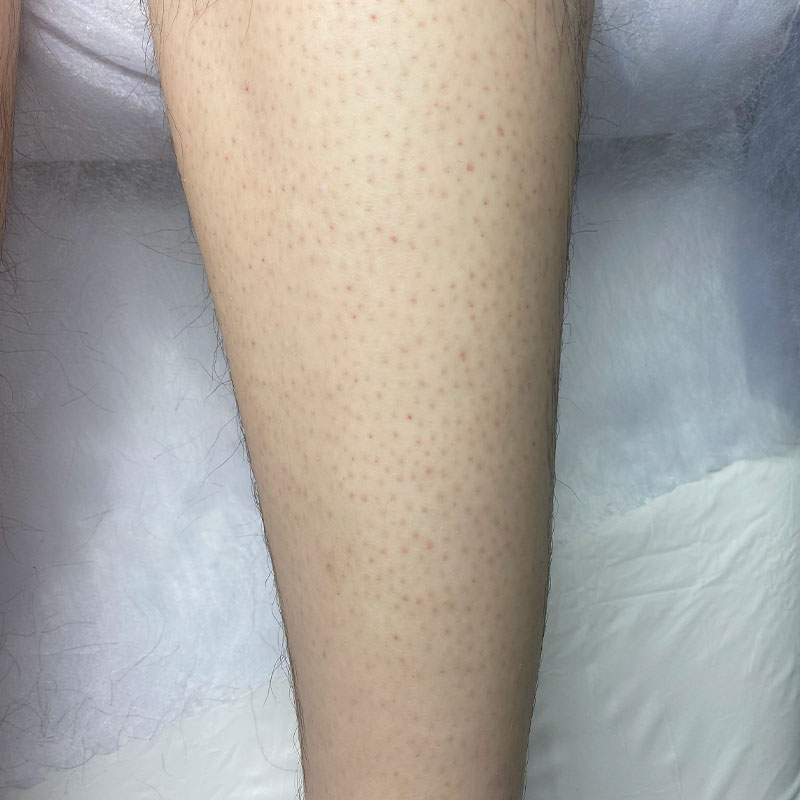
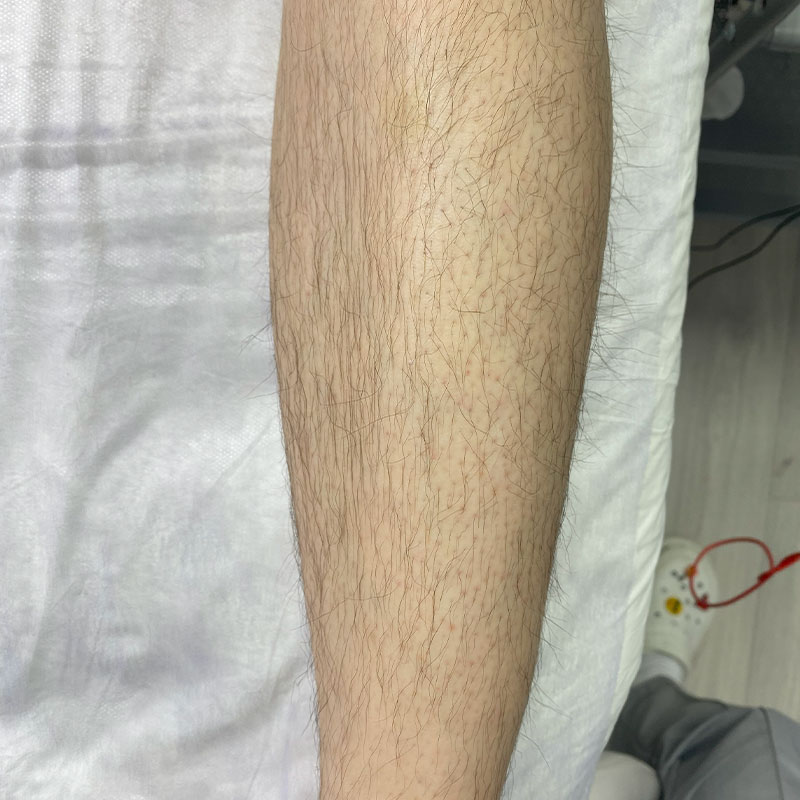
Common side effects and how long they last
After both procedures, the treated area typically shows:
- Mild redness for a few hours up to a day.
- Slight swelling around individual follicles, especially after electrolysis on the face.
- Small scabs on each electrolysis insertion point, which fall off within a few days.
- Temporary dryness or sensitivity, eased with a fragrance-free moisturiser.
Direct sun exposure on freshly treated skin should be avoided for at least a week, and broad-spectrum SPF is non-negotiable in Dubai’s climate. UV on inflamed skin is the fastest route to post-inflammatory pigmentation, the very problem laser patients most often want to avoid.
Both methods, when done correctly, also reduce ingrown hairs over time, since the follicles producing the trapped hairs are progressively removed or weakened.
Which method carries greater risk of complications
Both methods are safe in trained hands. The risk profiles differ.
Laser carries a higher risk of:
- Burns on darker skin tones if the wrong device or setting is used.
- Hyperpigmentation or hypopigmentation, usually temporary but sometimes lasting.
- Paradoxical hypertrichosis (increased hair growth in the treated area), mostly seen on the face and neck of women with hormonal patterns.
Electrolysis carries a lower overall risk but is operator-dependent. Poor probe insertion can leave tiny pitted scars; reused or improperly sterilised probes carry an infection risk. In Dubai, a certified electrologist working in a Dubai Health Authority (DHA)-licensed facility is the baseline requirement, not a luxury.
Single-use, sterile probes are a safety standard, not a premium upgrade. A clinic that reuses probes is a clinic to walk out of.
Cost comparison: electrolysis vs laser hair removal
The two methods price out very differently, and that’s where most reader confusion begins.
Laser is priced per session, per area, and a course of six to eight sessions covers most patients. Larger areas (legs, back) cost more per session than smaller ones (upper lip, underarms). The total course cost is predictable from the start.
Electrolysis is priced per minute or per session, regardless of area. A single follicle takes seconds; a coarse beard line on a patient with PCOS may take many hours over many months. The total cost depends almost entirely on hair density and how long the course runs.
In relative terms:
- For large areas with dark hair on lighter skin, laser is the more economical choice.
- For small, stubborn, or hormonally driven areas, electrolysis often comes out cheaper across the full course.
- For light, grey, or blonde hair, laser doesn’t work, so electrolysis becomes the only option that delivers a real result. Comparing prices isn’t the right frame.
A practitioner-led consultation gives a much more realistic estimate than a generic price list. The variables of hair, area, skin, and hormonal background change the equation completely.
Compare total course cost, not single-session price. A cheaper laser session at a clinic that needs ten visits to reach the same result as another clinic’s six is not actually cheaper.
Which body areas each method is best suited for
The table below pairs each common treatment area with the method that tends to perform best:
| Area | Better suited for | Reasoning |
| Upper lip, chin, jawline | Electrolysis (especially for hormonal hair, light hair, mature skin) | Permanent, works regardless of colour, handles hormonal regrowth |
| Eyebrow shaping (fine adjustments) | Electrolysis | Precision on individual hairs; laser is unsafe near the eye |
| Underarms | Either; laser is faster | Dark coarse hair responds well to laser |
| Bikini line | Laser for bulk reduction; electrolysis for finishing | Combination produces the cleanest result |
| Full legs | Laser | Large area; electrolysis isn’t practical at this scale |
| Back, chest (men) | Laser | Same reason as legs |
| Areola | Electrolysis | Sensitive area, often fine or mixed-colour hair |
| Fingers, toes | Electrolysis | Small area, often light or fine hair |
| Area | Better suited for | Reasoning |
|---|---|---|
| Upper lip, chin, jawline | Electrolysis (especially for hormonal hair, light hair, mature skin) | Permanent, works regardless of colour, handles hormonal regrowth |
| Eyebrow shaping (fine adjustments) | Electrolysis | Precision on individual hairs; laser is unsafe near the eye |
| Underarms | Either; laser is faster | Dark coarse hair responds well to laser |
| Bikini line | Laser for bulk reduction; electrolysis for finishing | Combination produces the cleanest result |
| Full legs | Laser | Large area; electrolysis isn’t practical at this scale |
| Back, chest (men) | Laser | Same reason as legs |
| Areola | Electrolysis | Sensitive area, often fine or mixed-colour hair |
| Fingers, toes | Electrolysis | Small area, often light or fine hair |
Electrolysis vs laser: which one to choose
When to choose electrolysis
Electrolysis is the right call in any of these situations:
- The hair is light, blonde, grey, white, or red.
- The hair is very fine.
- The skin is Fitzpatrick V–VI and previous laser treatment produced burns or pigmentation changes.
- The area is small, sensitive, or close to the eye.
- A truly permanent result matters more than speed.
- Hormonal growth (PCOS, post-menopause) keeps activating new follicles or reactivating ones laser only partly disabled.
- Past laser left scattered, stubborn hairs that don’t respond to further sessions.
When to choose laser hair removal
Laser tends to be the better choice when:
- The hair is dark and coarse, the skin is lighter than the hair, and the area is large.
- Time is the main constraint: full legs, back, or chest done in eight visits rather than over a year.
- Long-term reduction with the option of occasional maintenance is acceptable.
- The goal is significantly less hair, not zero hair.

When combining both methods makes sense
Combination protocols are common in serious clinical practice. Laser clears the bulk of dark, responsive hair quickly; electrolysis then finishes the work on the hairs laser left behind — the lighter ones, the scattered ones, and the hormonally driven new growth. A bikini line, beard line, or stubborn chin often ends with electrolysis even when it started with laser. The two methods are complementary, not rival.
Frequently asked questions
Is electrolysis truly permanent, or does hair grow back?
Electrolysis is genuinely permanent for the follicles it treats. New follicles can form under hormonal influence — particularly during puberty, pregnancy, perimenopause, or with conditions like PCOS — and those new follicles will need their own treatment. The follicles already treated stay treated.
Can laser hair removal work on grey, blonde, or red hair?
Laser doesn’t work on these hair colours. Light energy depends on melanin in the hair shaft to absorb the pulse and conduct heat to the follicle. Grey, white, and most blonde and red hair lack the melanin needed for the laser to take effect. Electrolysis is the only method that delivers results on them.
Which method is better for hormonal hair growth such as PCOS?
Both have a role, but electrolysis is the only one that permanently removes treated follicles. Laser reduces existing growth quickly; electrolysis is needed to address the new follicles activated over time by hormonal patterns. Many PCOS patients combine the two.
Is it safe to use laser on dark skin tones?
Laser is safe on dark skin with the right device. The Nd:YAG laser is the safer choice for Fitzpatrick V–VI skin because its longer wavelength bypasses surface melanin. The operator’s experience with that device matters as much as the device itself.
Can electrolysis and laser be done on the same area?
Both treatments can be combined on the same area, and that’s often the most efficient approach. A common sequence is laser for bulk reduction, then electrolysis for the residual hair laser couldn’t reach. The two methods don’t interfere with each other when sessions are spaced correctly.
Is there any downtime after either procedure?
Downtime is minimal for both. Most patients return to normal activities the same day, with only mild redness or sensitivity for a few hours. Heavy exercise, saunas, and direct sun exposure should be skipped for 24–48 hours after a session.